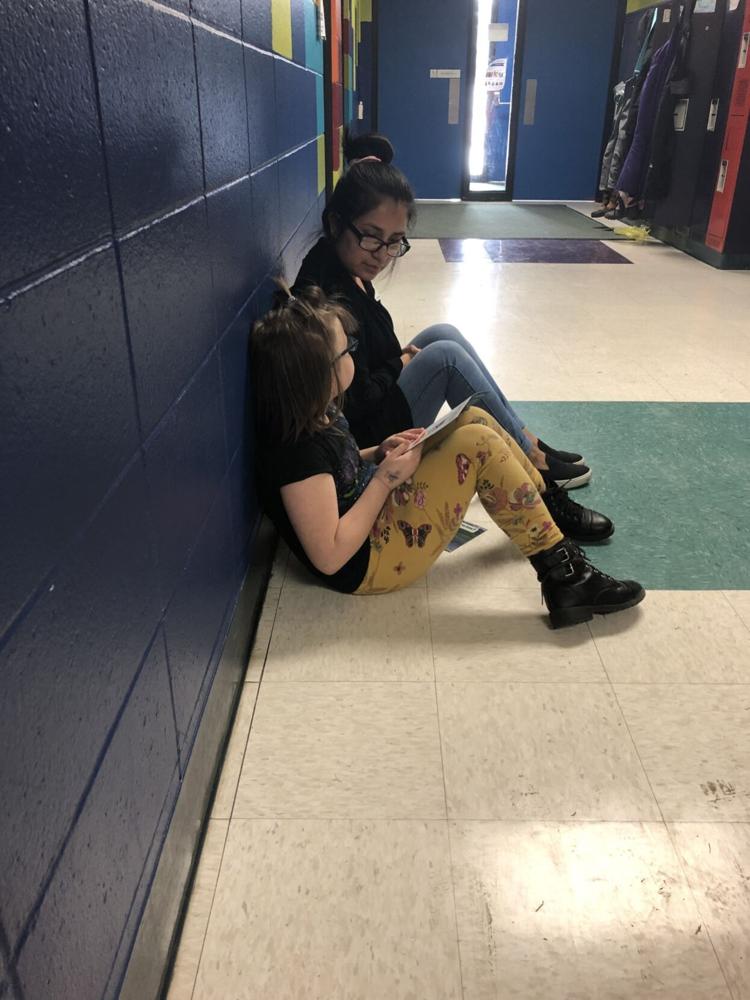
At the beginning of each virtual Mosaicos Cultural Enrichment tutoring session, Charles Payne checks in with how his student is feeling.
They take a few minutes for deep breaths and reflection before getting into school work, which typically involves reviewing lessons from class and ensuring the student is not falling behind on assignments.
The Stoughton-based nonprofit aims to celebrate diversity and support underrepresented youths and their families, founder and executive director, Yoli Rangel-FitzGibbon told the Hub.
One of the ways the organization does so is by pairing up students with tutors like Payne to help deal with navigating online school, and to form a healthy adult-student relationship.
Since Rangel-FitzGibbon moved to Stoughton 15 years ago, she has seen the community become more diverse; however, there was a need to help people, especially students of color, feel seen and represented in a way that a classroom setting may not provide. So, Mosaicos pairs up tutors and students who may feel underrepresented at school or in Stoughton, whether that be their race, sexuality or disability.
Mosaicos fosters connections and a feeling of belonging for those students and their families by bringing in tutors with different backgrounds and identities. The nonprofit pays for each tutor to attend training at an outside academy and does background checks through a partnership with Stoughton Area School District.
The nonprofit facilitates conversations and brings in speakers to talk about topics such as social justice and anti-racism.
Tutors are taught to use trauma-informed care, which means they look for symptoms of distress and methods to address these feelings. With school being online, students are struggling with the transition and having a difficult time dealing, Payne said.
“So that is what we’re really focused on right now is just providing another wall of support during what has been a very weird year,” he said.
Pre-pandemic, Mosaicos would place tutors directly in schools to work in the classroom with students and teachers. Now, they log in for 30-minute sessions to check in on students’ emotional well-being and help them stay organized with assignments and go over confusing concepts.
Payne, who has a background in education, feels that now more than ever, the program is integral to Mosaicos’ core mission of creating a more inclusive community. Virtual learning can set back children in terms of development, especially for students who already needed additional support, Payne said.
He sees the program as a preventative measure to make sure students are not left behind. COVID-19 disproportionately affects low-income and racial or ethnic minorities, in terms of health and economic factors, according to the National Institute of Health.
While also addressing the COVID-19 related challenges, the program is designed to provide a positive adult relationship with students. Payne said that having a positive relationship with an adult is important for development, especially when students have someone they can relate to on a personal level.
“And I know the fact that I don’t look like their teachers,” said Payne, who is Black. “ I look more like the students that I tutor, so it makes it easier for me to develop that relationship because we have a similar understanding of what it’s like to grow up looking like us.”
For more information, visit mosaicos.us or email contactus@mosaicos.us
 molly carmichael