All posts by mollyjcarm

Fitchburg artist creates, sells coloring book with daughter

Photo Courtesy: Christy Grace

For artist and Fitchburg resident Christy Grace, drawing mythical animals, such as an “opossumicorn,” was a way for her to work with her daughter and try to create steady income from home.

Those drawings turned into a coloring book, titled “Alphabeticorns” — a collaboration between Grace and her five year old, Eliana that features an alphabetized series of horned animals. The book’s theme is based on Eliana’s bedtime routine, where her mother conceptualizes creatures to protect her at night, Christy told the Star.

The book showcases 27 creatures with fun facts and discussion questions about each animal. Grace said it can be purchased by pledging at least $15 to her Kickstarter: “Alphabeticorns! The Coloring Book” which runs until Thursday, Nov. 19. Eventually, the books will be available on Christy’s website and Etsy shop, “ArtofChristy.” Grace is hoping the book will provide sustainable income for herself and her family. As of Tuesday, Nov. 10, the Kickstarter campaign has 100 backers and just over one-third of it’s $21,500 goal.

For now Christy’s priority is to get the Kickstarter campaign fully funded to cover costs such as shipping, processing fees and the work that went into creating the designs. The books are expected to deliver to campaign supporters before Christmas, she said.

Before COVID-19 reached Wisconsin, Christy said she would attend public art shows and markets to showcase her work, which includes paintings and jewelry often inspired by nature. Since then, Christy has had to rely on virtual means to sell her art, one of those being her Etsy shop, which features custom orders.

But Christy said there isn’t a lot of time to satisfy the orders, since she is home all day with her daughter, helping her with virtual schooling. She said she needed to restructure the way she makes art, so that’s how the coloring book concept was born.

And so the book’s concept spawned out of a nighttime tradition between Christy and her daughter, after Eliana moved into her own room.

To make her feel less nervous about the change, Christy began conceptualizing Eliana imaginary animals with Eliana before bed, telling her they would protect her. Eliana would then “put” the animal on decorative branches and paper birds that hang above her bed to watch over her while she slept.

It soon became that Eliana asked for a new animal every night, Christy said.

Over the past few months, the animals had started to take on some variation of a unicorn. A “toadicorn” and a “platypusicorn” are just some of the creatures the mother and daughter conjured up that can be seen brought to life on the pages of the coloring book.

“We were trying to find a way to bring about the peace and silliness that we felt at night into the world, because it’s kind of a challenging world right now,” Grace said.

COVID-19 Update: Dane County on course for growing case averages, hospitalizations

By Molly Carmichael | November 16, 2020 2:00 am

Image by: Jeff Miller

With an increase in the COVID-19 case average and an all-time high in reported hospitalizations, Dane County officials advise people to stay home and celebrate the upcoming holidays responsibly. 

The number of hospitalizations in Dane County has increased every day in the past two weeks with the trajectory of overall hospitalizations in South Central Wisconsin expected to rise, according to Public Health Madison & Dane County. There are more hospitalizations now than at any other time during the pandemic, with a peak of 167 on Nov. 12. Within the 14-day period, one Dane County hospital reported at least one day of critical staffing shortages. 

Dane County’s 14-day COVID-19 case average has also increased for the fifth consecutive week. The latest two-week snapshot taken by the public health department revealed an average of 364 cases per day with 5,094 active cases total.

The positivity metric, the rate at which people are testing positive, rose to 7.4% from 6.0% in a week. This metric indicates more widespread infections, and is currently above what PHMDC has deemed as the desired threshold. 

Call for action

With rising cases and the current strain on hospitals that is only expected to grow, Gov. Tony Evers issued Executive Order #94 on Nov. 10 that urged Wisconsinites to stay home as much as possible. Following this, Evers and the Wisconsin Department of Public Health recommended best practices, such as avoiding travel or dining with people outside your household to reduce the spread of COVID-19. 

“I know this upcoming holiday season is going to be especially tough,” Evers said. “Folks, I am asking everyone to come together and take the steps needed to slow the spread of this virus. In doing so, we can protect our loved ones and save lives.”

While the order carried no legal action, Dane County Executive Joe Parisi publicly requested that state leaders take initiatives to mitigate the spread of the virus and sit with Gov. Evers to create a plan. 

“Action, or in this case inaction, has consequences and it’s visibly on display in every hospital in this state right now,” Parisi wrote in a letter to the Legislature. “What we are seeing with hospitals re-directing patients or in the case of Madison hospitals, using up every available ICU bed before the coldest days of winter arrive, was entirely preventable.” 

Parisi went on to urge the rest of Wisconsin to take action along with Dane County.

“Dane County enacted Public Health orders this summer that helped slow the progression of Covid-19 in our community. These orders remain the strictest in the state and the data shows they work,” he stated. 

People with Disabilities rally around Biden’s health care promises

Every single day Jim Turk hosts his Twelve O’clock Shakedown on Facebook. Wearing tri-colored, peace sign sunglasses, Turk queues up some Bruce Springsteen and begins a 15-minute session of music and motion that is tailored to people with disabilities. 

Not only does Turk promote wellness each day during his live streams, but he is an outspoken advocate of bettering health care access for people disabilities. 

For people with disabilities, this upcoming election is crucial to ensure a continued, if not hopefully improved, health care system that guarantees affordable, non-discriminatory services and treatment. 

 Like 600,000 fellow Wisconsinites, Turk and the Shakedown members have at least one disability. While health care often gets complicated in terms of semantics, Turk boils it down to just wanting people to have full-access and coverage that won’t push them into poverty. 

“It’s silly that we live in the only developed nation that doesn’t provide that right. To me, that’s crazy,” Turk said. “You have people that are being denied, through no fault of their own.” 

People who have disabilities are more likely than people without disabilities to have issues accessing and affording medical treatment, according to NCBI. Private insurance often doesn’t cover all of the treatment people with disabilities may need, and it can be especially expensive for someone unable to work.

The Affordable Care Act, colloquially known as Obamacare, sought to give low-income or unemployed Americans a public health care option. Additionally, the ACA expanded Medicaid coverage and established reforms like restricting pre-existing condition exclusion—which chronic disabilities would fall under. 

Medicaid, Medicare and the Affordable Care Act give people with disabilities access to treatment and home-based services that private insurance won’t cover, according to Kiley McLean, an expert on developmental disabilities and policy. 

Going into the election, many advocates and people with disabilities want these programs to be expanded. Autumn Neugent, an advocate for people with disabilities and Ms. Wheelchair Wisconsin 2019, hopes to see this election lead to fair and full health care access. 

“Like any team, you have to look at how the unhealthiest people are being treated,” Neugent said. “And make sure that the health care encompasses everyone, from our healthiest people to our unhealthiest people and our richest people to our poorest people—that everybody is getting the same access.” 

President Trump won Wisconsin in 2016 with his Make American Great Again promises. As for health care, he ran on the idea of “repeal and replace.” He would repeal the Affordable Care Act and create a program based on restoring state authority and free-market principles, according to Ballotpedia.

He eliminated the individual mandate portion of the ACA in 2017, but Trump’s goal is to replace it entirely. His plan advocates for competition between private insurance companies to keep prices low. It aligns with the stances of many Republicans such as Sen. Ron Johnson. 

“It [Affordable Care Act] was terrible and very, very expensive,” Trump said during a speech this September. “But, by far, the worst part of Obamacare was this thing called the ‘individual mandate’”

Trump claims he would still implement rules to protect people with pre-existing conditions—a category people with chronic disabilities fall under. However, the constant battles over the legality of the Affordable Care Act mean that the protective reforms in place are just as uncertain as overall coverage. 

His goals are met with worry by people with disabilities who have dealt with issues regarding coverage. A second term for Trump would be detrimental to people with pre-existing conditions, according to Neugent. 

“I cannot control the fact that M.S. has made me unable to work,” Neugent said. “I am no less than anyone. I just have a different set of circumstances.”

Since Trump’s 2016 victory, Wisconsin has elected a Democratic governor. Beating the incumbent Scott Walker, Gov. Evers has defended the ACA and fought to get Wisconsin out of the federal litigations against it. 

While Trump doesn’t have a concrete agenda or stance regarding people with disabilities, his desire to make cuts to and possibly repeal the ACA in its entirety is a plan in itself, according to McLean. 

Vice President Joe Biden, does have a plan on his website. In “The Biden Plan for Full Participation and Equality for People with Disabilities,” he stresses his support of expanding the ACA and Medicaid, as well as looking into specific elements that may harm people with disabilities. 

Self-advocate and former WPDD Board Member David Pinno believes that in this regard Biden’s plan is more ideal for those who have pre-existing conditions. 

“I’ve seen President Trump’s plan. I’m very scared of that plan,” Pinno said. “I don’t think he understands the severity of what it actually means to a person with a disability who has a pre- existing condition.”

The plan includes other goals like eliminating the SSDI benefit cliff, phasing out the subminimum wage, incentivizing businesses to hire people with disabilities and more. 

During a speech on June 25th, Biden criticized Trump’s stance. 

“Today, we’re in the middle of the worst global health crisis in living memory and Donald Trump will file in the Supreme Court today an attempt to strip away healthcare coverage from tens of millions of families in the United States,” Biden said. “Strip away their peace of mind, away from more than 100 million people with pre-existing conditions.”

Beth Allen, Vice President of Advocates of Diverse Abilities, feels her existence as a person with a disability has been politicized, and that Trump normalized disrespect toward marginalized groups through his behavior. 

“But I think that with Biden, there is hope,” Allen said. “It’ll show people that you aren’t the silent majority. You’re the loud minority.”

Allen acknowledges that the Affordable Care Act, like every law, has its flaws, but it has opened up doors for people with disabilities. 

“I think it’s important that we take this time to really consider what we believe human rights are, and I believe that health care is a right,” Allen said. “I think that Joe Biden exemplifies that, in that he was such a big part of the Affordable Care Act”
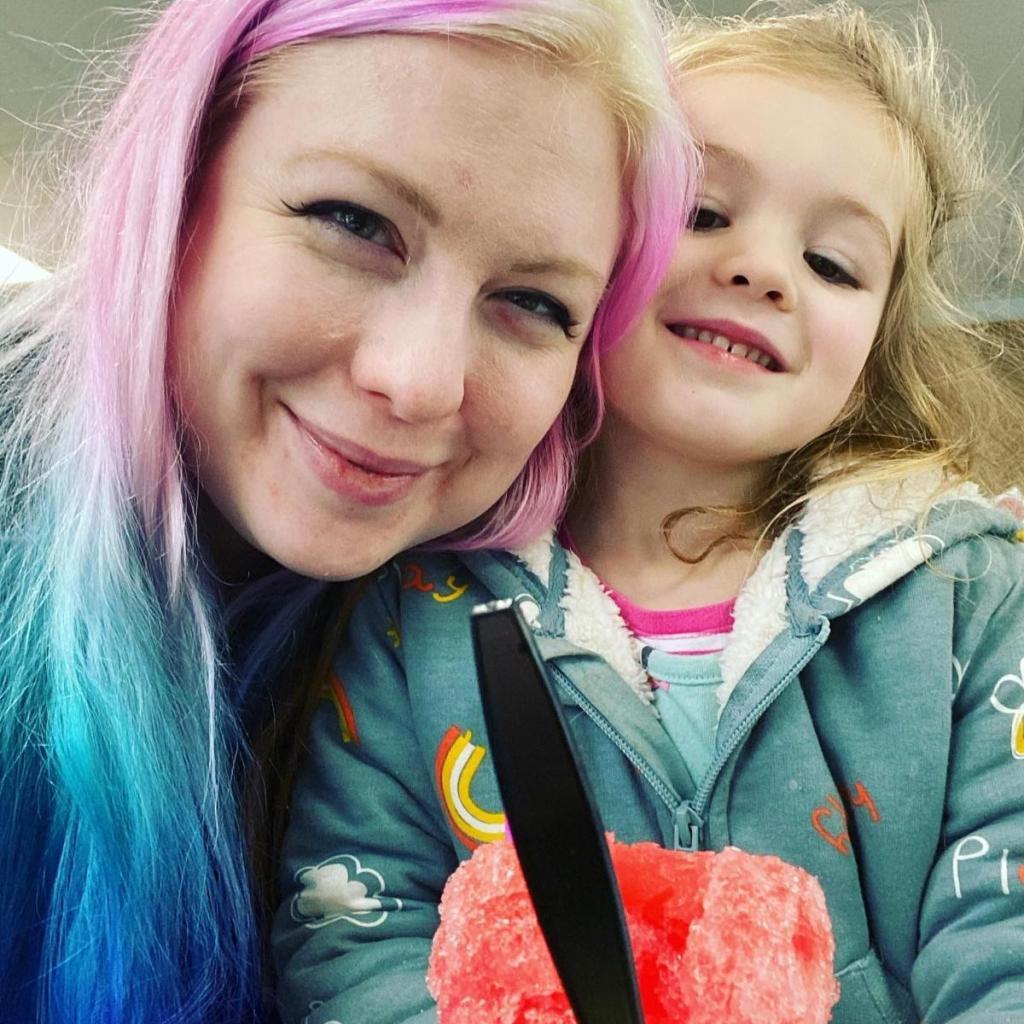
City Council votes on amended MPD purchasing procedure, puts hold on tear gas ban

By: Molly Carmichael 

Photo by Cameron Lane-Flehinger

The Common Council met to discuss and vote on a number of police-related items following a summer defined by social justice demonstrations and calls for accountability on the police. 

The City Council approved an ordinance allowing the Madison Police Department to continue, with constraints, to obtain equipment through its 1033 program and passed measures to launch a study on de-escalation alternatives before banning tear gas Tuesday night. 

The 1033 program allows the MPD and other law enforcement agencies across the country to obtain surplus military-grade equipment, which includes everything from vehicles to fire-aid supplies, for little to no cost. 

The ordinance in its original form,  proposed by Ald. Max Prestigiacomo, District 8, and Ald. Rebecca Kemble, District 18, would have cut off the MPD’s involvement with the program completely. 

However, an alternate version proposed by Ald. Keith Furman, District 19, and Ald. Babara Harrington-McKinney, District 1, offered a new procedure, requiring the council to approve any item purchased by MPD in excess of $50,000 or more, creating a list of prohibited items the MPD cannot buy and subjecting the police department to a bi-annual review of its purchases. 

The approved ordinance prohibits the purchase of certain items — including tear gas, bayonets, grenade launchers, grenades, explosives, armor-piercing firearms and ammunition, tracked combat vehicles and weaponized drones — through the 1033 program. 

Registered speaker Nicholas Davies rejected claims that the program’s true purpose is to save money for police departments. 

“Arming the police this way makes it clear they don’t trust civilians and they’re prepared to turn on use at any moment,” Davies said. “Madison PD bought a $700,000 mine-resistant vehicle. This is not a cost saving measure — this is like a mid-life crisis vehicle. It’s an armoured minivan that’s intended to intimidate.” 

The motion for the alternate ordinance was approved 13-6 with opposition from Prestigiacomo, Kemble, Ald. Marsha Rummel, District 6,  Ald. Michael Verveer, District 4, Ald. Grant Foster, District 15, and Ald. Arvina Martin, District 11. 

Additionally, the council agreed to launch a study to find alternatives for tear gas before adhering to a decision to ban the crowd control measure entirely. The agreement came after a failed motion to ban tear gas, mace and impact projectile devices altogether. 

The original proposal intended to ban tear gas in Feb. 2021 accompanied by a study of alternatives by MPD. Ald. Lindsay Lemmer, District 3, amended the proposal to hold the ban pending the completion of the study. 

“I’m concerned that without knowing what those findings are, we could potentially be making people less safe rather than what the intent of what this resolution is,” Lemmer said. 

This summer, law enforcement officers used tear gas during protests in the downtown area to deter and disperse demonstrators, leading to subsequent calls by the community for restrictions and accountability measures over the police to be passed. 

Prestigiacomo felt tools like tear gas cause more harm to the community and contributes to an unhealthy relationship between the police and residents.  

“We should not allow the police to use weapons when they have flagrantly violated their own rules with these weapons,” Prestigiacomo said. 

David Sterken, a registered speaker and physician, urged the council to take into account the dangerous effects of tear gas and the harm it could potentially inflict on bystanders who are peacefully protesting or live nearby. 

Tear gas can cause chemical burns, allergic reactions, respiratory distress. Individuals with pre-existing conditions have a higher risk of developing severe symptoms which can lead to respiratory failure, according to the American Lung Association. 

Kemble voted against the final measure. 

“This is an issue that has been a concern in the community since June this year,” Kemble said. “I think if we’re gonna do something on this we need to do it now.” 

The resolution to commission the study and make the ban conditional upon the results passed 16-3. 

Making Art Out of Ashes

Cassy Marzette woke up in the hospital and decided she was going to do a one-woman play. The play would be called “A Conversation with Ashes” and it would be based around a recurring dream where Marzette fights with herself. 

“Stop. Breathe and just try. Just fuckin’ try.”

“It hurts too much to live. I’m not who you think I am. I’m not who you think I can be.” 

She walks up to a mirror and witnesses her younger-self burst into flames and falls to a pile of ash. 

Madison-based artist Cassy Marzette is a 28-year old visual and performance artist, writer and podcast producer. Beyond that, she is a young woman on a path to find her voice and use that voice to heal from her traumas and help others do the same. 

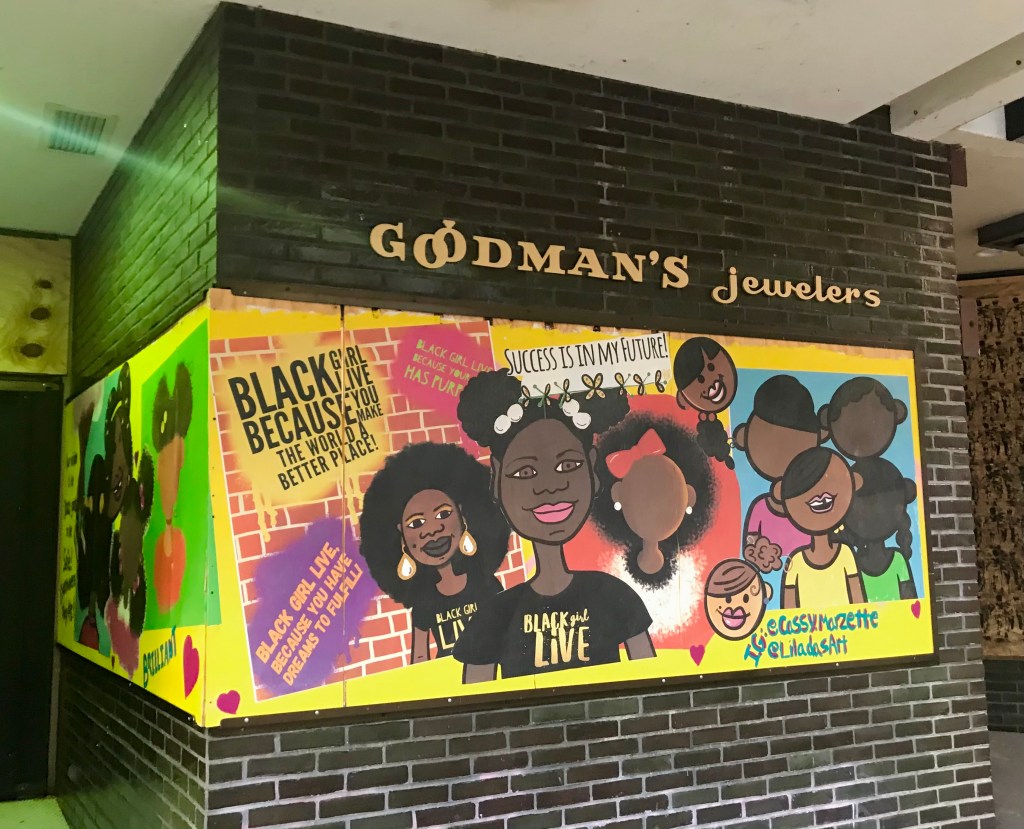
This summer amidst the protests, she painted the sprawling yellow mural outside of Goodman’s Jewelers on State Street with a team of Black women. Atop the yellow paint are Black girls— some with smiles and others without faces. In bold blue font are words and phrases like “BRILLIANT” and “Our vision is for Black girls to be Safe! Everywhere They Are!” Yellow was chosen to represent joy and the hope they have for the future.

Photo by Molly Carmichael

“The mural was the first time I’d really done art for myself—using my voice for something,” Marzette said. 

She spent years making art of what other people wanted and often for free. 

Marzette grew up in Racine, Wisconsin with her six siblings. She has always been artistically inclined. Her drawing skills sharpened  because she spent a lot of time observing—mostly because she didn’t speak up herself. 

On top of her quiet demeanor, her voice was silenced by her classmates trying to define who she was as a Black girl. Kids would make assumptions saying she was too Black or that she was too white. She didn’t have a voice in the matter of who she was. It led to isolation and bullying from her peers. She used her art to try to make life at school a bit easier.

“When other students saw my stuff, they were like, “oh, will you draw me something?” she said. “And I realized I was an easy way to not get bullied, and so I started just drawing stuff for people and for years I did it for free.”

For a while, Marzette rejected visual arts, as it was a reminder of a time when she did things for other people. During and post-college, she primarily focused on performance art, screenwriting and directing. It was during this time she struggled with bipolar disorder and had difficulty accepting it. 

She intentionally overdosed in 2016 and woke up in the hospital with the idea for a one-woman show. The play, “A Conversation with Ashes,” opens with her bursting into flames, revisiting moments in her life, and at the end, rising out of the debris, reborn like a Phoenix. 

Her one-woman show was a point where Marzette faced despair then stepped back. She has been moving forward since, though it is no easy feat. 

“We do a lot of this activism, but if we’re not good for ourselves, how can we expect other people to change the world?” she asked. 

Along with helping herself, Marzette has a strong connection to helping youths in the community and feels a strong connection to teaching—but not in the traditional classroom setting. She has taken on a lot of teaching positions, such as putting on productions and leading creative classes at St. James Catholic School. 

Marzette is inspired by the kids she works with, especially those who use art to find their voice. She worked with a shy and hesitant 5th or 6th-grade-girl in an improv class. By the end of the class, the girl had completely opened up and was one of the funniest in the group. 

Marzette drew back when she heard the term “role model.” She didn’t think it was a title she initially saw herself as being worthy to have. Deeming someone a role model may have too many connotations, but it is clear Marzette is someone her younger self would look up to. 

“It was that it was also then that speaking part, but not speaking up. Not using my voice. Right now I do a lot of work with black girls defending black girl hood is the organization I’m a part of,” Marzette said. 

A few years ago, she met her own mentor, Lilada Gee through a mutual friend. Gee is also a Madison-based artist and activist. They currently run the podcast Defending Black Girlhood, a show about empowering and protecting Black girls; though, their relationship runs far deeper than just professional endeavors. Gee saw Marzette face despair but fight to live and reclaim her life. 

“I have such a deep admiration for her, because, you know, she came from her darkest place and really built life for herself, but also through her work, you know, built life for others,” Gee said. 

Marzette resonates with Annalise Keating, the main character in How to Get Away with Murder. “I’ll explain,” she quickly cut in to clarify. 

Like Keating, Marzette describes herself as an intricate, flawed human but at the core just wants to be loved. Marzette isn’t just a handful of labels. There is a backstory. She is proud of being a Black woman, a queer woman, a woman who has bipolar disorder, a woman who has suffered trauma and grown from it— helped others grow. 

But aside from the labels, there is so much behind who she is and seeing how far she has come, there is so much room ahead. Her drive is the untapped potential. 

“I think people define themselves but then don’t give themselves room to grow,” she said.  “Definitions are expansive.” 

Her close friend, Alexandra Gee, has grown and matured with Marzette. Together they are carefree and fun, but above all, they watch and support each other through everything—especially the challenging times. 

“I’m excited to continue to see her expand as an artist and really trust herself in her abilities and what’s inside of her to come forth in the times to come,” Gee said.  

Her voice is getting louder. She is still moving forward from the darkness. She has risen from the ashes. 

Madison nonprofits and faith-based organizations provide the homeless with winter resources and shelter.

The homeless are not invisible. Walk down State street or around Capitol Square any day or time. Look for carts of clothes and blankets chained up to bike racks. People are nestled into corners, asking for change or sitting in public places to warm up. Homelessness is part of Madison.

The cold is not uncommon in Madison, Wisconsin, where winter day dip below freezing. These months can be uncomfortable and unsafe for everyone, but the homeless are especially vulnerable to the elements. Madison’s homeless are reliant on nonprofits and faith-based organizations for temporary shelter and immediate resources to get through winter.

No one is surprised by the cold.  Chris Archuleta, the outreach director of the student organization BundleUp, did not think anyone is surprised by the winters, but rather what level of preparedness to have.

“Homeless people may be assuming they can get into a certain place and then not have access to it. You know like if a shelter is passed capacity, so maybe shortcomings with respect to the execution of it,” Archuleta said.

Those experiencing homelessness, like Miguel Taylor, may not be too keen on going to the shelter, even knowing as the cold months approach.

“The shelters is not really a good place to be. Why? Because people steal from you, you have a curfew, and the bottom line is that I’m trying to make ends meet in the best possible way I know how,” Taylor said. 

Taylor currently stays in a tent, pitched near John Nolan and takes it “one day at a time.”

When the temperature drops below 20 degrees, it is considered a “weather night” for temporary shelters. This means that the shelters expand their capacity because being unsheltered in extreme coldness could lead to hypothermia or death. No one can be left outside. Shelters like Porchlight and Salvation Army give clients a 90-night limit that resets every year. This means that a person cannot spend more than 90 nights in one of the shelters. Porchlight does not deny shelter to anyone on weather nights even if they have exceeded their limit, are drunk or have been previously suspended.

With policies such as this one and a general increase in need for resources, shelters and nonprofits are strained in the winter. Porchlight Director of Services, Kim Sutter, explained that the shelter may be serving around 40 to 60 people in the summer months, but for coldest days, that number can exceed 150. Porchlight operates three temporary overnight shelters that are housed in churches: Shelter One, Shelter Two and Shelter Three. Shelter One and Shelter Two are up and running the entire year, but Shelter Three is only available during the winter months due to increased demands. This expansion into a third shelter location is challenging because of a lack of funding that keeps staffing low. There may be just one staff member with 60 male clients at a shelter.

Freezing nights can lead to hypothermia or frostbite for anyone, but this risk is increased when alcohol is involved. According to poverty expert, Barbara Wolfe, alcohol can lead to irresponsible decisions, such as not taking the correct precautions to stay warm and safe. Shelters may be the safest choice for a homeless individual in regards to staying safe from the elements; however, that does not mean it is an ideal option. These shelters are usually in church basements with around 40 beds, open-air style.

“There aren’t very good ways for keeping people safe with the setup that we have because the setup is bad,” Sutter said. The open-air style lacks privacy, security and space, which can be especially challenging for people with mental health issues or behavioral issues who do are challenged by crowds.

Mendota Elementary Provides Support in times of COVID

It’s a Tuesday afternoon and the grounds of Mendota Elementary school are vacant. There are no students sitting for circle time. There are no teachers organizing crafts, games and lessons. Instead, students and teachers are at home learning virtually. Though it’s quiet now, in 24 hours there will be a pop-up pantry with dry goods, meats and produce; on the other side of the parking lot, there will be a public library book bus.  

The staff and systems in place at Mendota Elementary have been supporting families in ways beyond education despite the physical barriers put in place by COVID-19. 

Due to COVID, every school in MMSD began the school year in a fully virtual format. This means staff working with Mendota Elementary have physical limitations to their interactions and assistance with students and families. Though providing students with traditional services isn’t currently possible, families feel that the school is supporting their needs in these challenging times just as they had done before. Hailey Spring, a mother with two elementary-aged children, has had to take time off work to homeschool her children while taking online college courses. 

“It’s been really hard because I don’t feel like I can go anywhere,” Spring said. She would rather her children be at home during coronavirus and believes the school has found ways to ensure student’s needs are being met and making the process as organized as possible. “They do so much at Mendota and even Madison School District are making sure that no matter what income the kids still get food boxes every week if they want to.” 

Mendota, along with Leopold Elementary, transitioned to a community school in the 2016-2017 school year. 

Madison Metropolitan School District defines a community school as a “place that builds on the assets of the community to help serve the identified needs of the students, families and community through well-integrated and coordinated, strategic partnerships.” Mendota is one of four community schools in the district—all of which are elementary level schools. 

The school and community have a symbiotic relationship. The school has a resource coordinator who integrates services like vocational training, food pantries, health services and counseling between the school and community partnerships. 

“The community school is a positive addition. There definitely was a need there,” Spring said. 

The school builds bridges with school partners and community stakeholders to create opportunities for children and families—like accessing a school pharmacy, finding transportation to a job interview or leisurely activities such as a camping trip, according to PTO member and Mendota parent Beth Welch. These in-person social events and extracurricular opportunities were lost due to the pandemic. 

“There were so many in-person community-building, relationship-building, and skill-building activities and opportunities and you can’t do that right now,” Welch said. “So that’s what has changed so it’s all transitioned to being virtual or drive-thru or offsite.”

The school play is one of those events which couldn’t be translated to a virtual platform. Mendota parent Shelly Patterson says her daughter was disappointed, and that the biggest struggle of virtual learning is the loss of social interaction through school and extracurricular activities. 

Though things have changed, the school is still providing students with support and resources while following public health guidelines. The social and communal aspects of the school were stifled with the pandemic, but tangible needs such as backpacks full of supplies, technological help and equipment, and regular meal pickups have stayed consistent, according to parents. Additionally, the school is maintaining contact to check-in with families. 

The school partners with the City of Madison and organizations to provide year-round free meals. 

“I think they’re doing great. They have provided supplies for us. They are checking to see how we feel things are going, said Patterson. “They are really open to having interaction with the parent and trying to figure out what’s best for the kids.”

 While some families have started learning pods, others are facing barriers like accessing stable internet access, finding childcare or just dealing with emotional stress. At Mendota Elementary nearly three-fourths of the student body is considered economically disadvantaged, according to the Wisconsin Department of Public Instruction School Report Card.

State Rep. Melissa Sargent, whose district covers much of Mendota’s neighborhoods, believes the pandemic is exasperating inequalities that already existed in our public school systems or childcare settings. 

COVID is hitting communities facing social and economic inequities—often those from racial and ethnic minorities—the hardest, according to the CDC.  Compared to other MMSD elementary schools, Mendota has the highest percentage of economically disadvantaged families. 

The Madison Community School Framework was specifically designed around supporting low-income families, families of color, families who have a child with a disability and families who do not speak English. The connection and relationships between the school, families and community partners has the ability to increase equity and accessibility of opportunity, according to the framework. 

 “I would love to see the community school model welcomed and embraced, in particular in elementary schools,” said Rep. Sargent. 

Many Mendota families were dealing with socio-economic challenges pre-COVID. These challenges will be amplified, but Mendota Elementary’s community model has created a supportive network to mitigate these effects and make sure families have somewhere to turn. 

“I feel like if I really needed something I could call the school and if they could help provide it they would. I’ve actually always felt like that with Mendota,” said Patterson. 

Final nominations have been made for Madison’s Police Civilian Oversight Board

Image By: Cameron Lane-Flehinger

By Molly Carmichael | October 5, 2020 2:00 am

All nine community social justice organization recommendations for Police Civilian Oversight Board members have been announced ahead of this week’s Common Council session.

On Friday, Mayor Satya Rhodes-Conway and council leadership announced their recommendation for the final Police Civilian Oversight Board members based on a community group nomination. 

“With these nominations, we get the Civilian Oversight Board off to a strong start,” said Council Vice President Syed Abbas. “Thank you to all the community groups who participated by nominating candidates and helped bring the Civilian Oversight Board to fruition.”

The board was established by a vote on Sept. 1 to ensure the Madison Police Department is held accountable by the community. The idea of an oversight board originally came as a recommendation from an Office of Research Integrity report in 2015, which was commissioned in response to the death of Tony Robinson, who was shot and killed by Madison police officer Matt Kenny.

The Mayor and Madison City Council leadership chose nine recommendations from 27 nominations made by local organizations. Additionally, Mayor Rhode-Conway nominated two members for the Board, Keetra Burnette and Keith Findley, and the Council will nominate two more this week for a total of 13 Board members

“There were over 75 applicants interested in serving on the Civilian Oversight Board, making our decisions very difficult,” Rhodes-Conway stated in a press release. “I am confident that both Ms. Burnette and Mr. Findley will bring experience, perspective and community connections that will help the Board succeed in its mission.”

Burnette is a senior director at United Way of Dane County and is a member of the Executive Team of the Black Leadership Council. Findley is a co-founder of the Wisconsin Innocence Project and was a co-chair on the MPD Policy and Procedure Review Ad Hoc Committee. 

Another community group appointee, Isadore Knox Jr., was nominated by the NAACP. Knox is an active community member and retired public servant. He also served a term on the City Council for District 13 and worked in the Dane County Office of Equity and Inclusion. 

Other appointees are Ananda Deacon, nominated by Freedom, Inc.; Joshua Hargrove, nominated by JustDane; Rachel Kincade, nominated by NAMI; Ankita Bharadwaj, nominated by OutReach LGBTQ+ Community Center, Yesenia Villalpando-Torres, nominated by UNIDOS Against Domestic Violence; Maia Pearson, nominated by Urban Triage; and Jacquelyn Hunt, nominated by YWCA. 

Many of the appointees have strong ties to the Madison community through activism, public service and volunteer work. One of them is Shadayra Kilfoy-Flores, a longtime community advocate who spoke on policing-related issues at City Council Meetings. 

Kilfoy-Flores was nominated by the Community Response Team — a Madison-based group of people who support community-based public safety alternatives.  

The Police Civilian Oversight Board will later appoint an Independent Police Monitor and work with the community to review the Madison Police Department’s use of force, training, hiring, policy, community relations, etc and make recommendations. Additionally, the board will provide accountability over the implementation of the recommendations made by the 2019 MPD Ad Hoc Committee. 

The Common Council will select the two final appointees this week to complete the 13-member board. All 13 appointments will be up for confirmation at the Common Council meeting on Oct. 6

Body camera pilot program moved forward by Madison Committee

Image By: Courtesy of UW-Madison/ Bryce Richter

By Molly Carmichael | September 23, 2020 9:00 am

An amendment allocating $83,000 for a police body-worn camera pilot program was approved by the Madison Finance Committee on Tuesday and will advance to final deliberations for the 2021 Capital Improvement Plan. 

The Finance Committee voted 4-2 to approve the body-worn camera pilot program, which would fund 48 body cameras for police officers. The City Council will decide in November whether or not to include it or not in the 2021 Capital Improvement Plan. 

Ald. Barbara Harrington-McKinney brought the budget amendment forward. She felt that advancing with the pilot program was necessary to provide accountability and transparency to the community. Harrington-McKinney specifically referred to George Floyd, whose death was recorded on body cameras worn by the four officers involved. 

“One of the things I want the committee to consider is the cost to the city if we do not have the cameras,” said Harrington-McKinney. “I want the committee to really consider how it is so important for us to have that vision. Is it a panacea, no it’s not, but it will have eyes. It will have verbiage and footage.” 

The amendment received a majority vote, despite the City Council not yet receiving a conclusive report from the Body-Worn Feasibility Review Committee. The ad hoc committee was established in April at the recommendation of a previous committee created to study the Madison Police Department after the death of Tony Robinson in 2015. 

“The reason is that I wanted to be proactive. I wanted the considerations that I am going to be moving forward to be part of the conversation,” said Harrington-McKinney. 

While the amendment will go forward with possible approval for next year’s budget, the committee added language to make the program dependent on the final feasibility report regarding body camera use by MPD. 

Objections came from Ald. Rebecca Kimble and Ald. Keith Furman. While they were not opposed to body cameras, both alders wanted the Council to wait for a recommendation from the Body-Worn Feasibility Review Committee. 

“To me, this is flying in the face of a five-year-long process which is almost at the end,” said Kimble. “I feel we need to wait for that.”

August 2008

Concrete scraped

skin and burgundy 

scabs 

Embellished our knees.

Viridescent stains

accented our indigo shorts and 

Plagued 

Our mothers. 

Mud 

Caked 

into the creases

of our palms,

Like skinny trails on a map. 

We had to be tenacious,

small beasts

to catch our pray

before the sun 

Went down. 

Eight Rollie Pollies 

Held 

hostage 

In a dixie cup. 

We reigned over these creatures.

       Something small 

In a world 

So much bigger than us.